Our Science › Neurology › Parkinson’s Disease
Targeting Adenosine A2A Receptors in Parkinson’s Disease
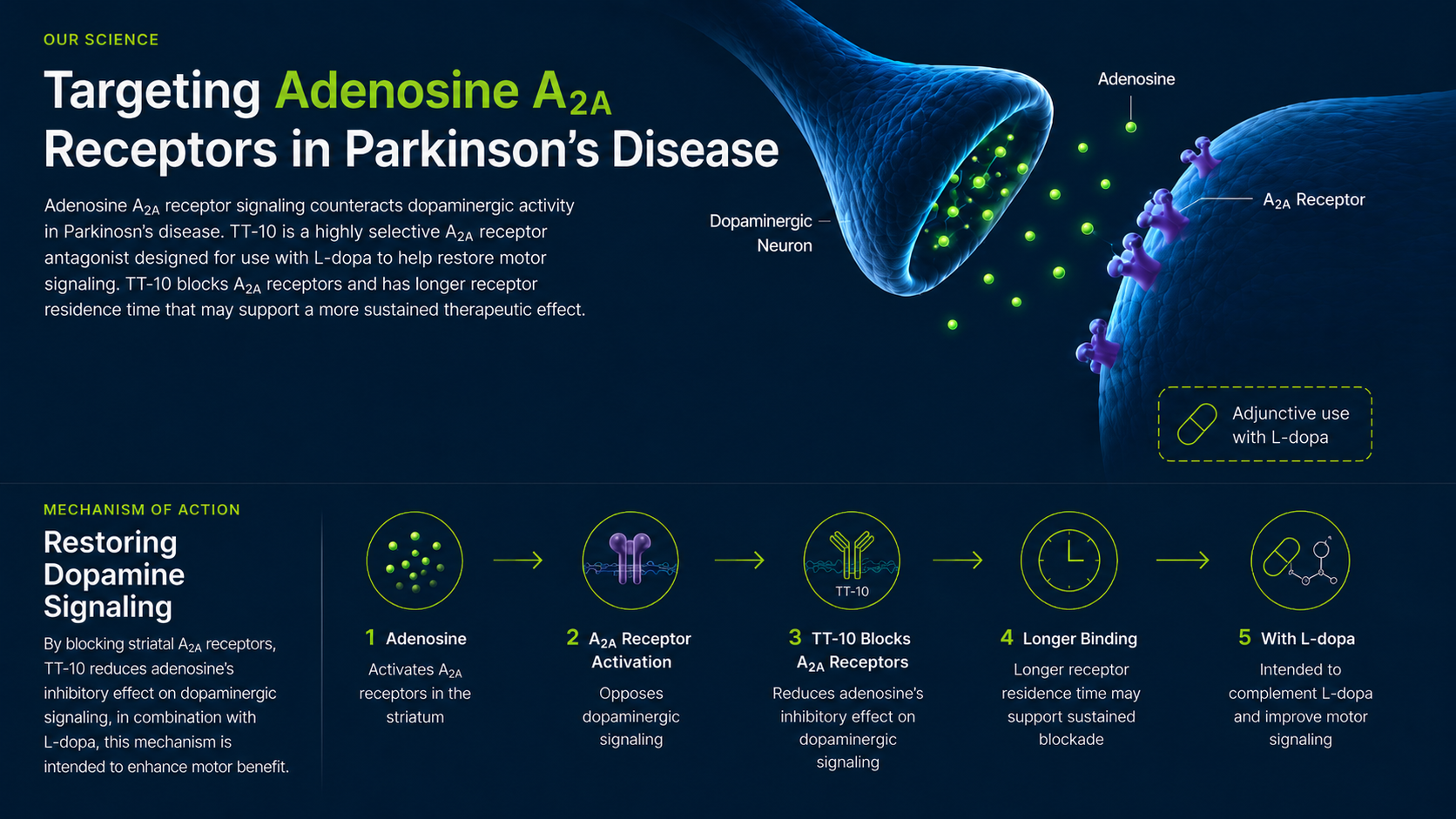
Adenosine A2A receptor signaling counteracts dopaminergic activity in Parkinson’s disease. TT-10 is a highly selective A2A receptor antagonist designed for use with L-dopa to help restore motor signaling. TT-10 blocks A2A receptors and has longer receptor residence time that may support a more sustained therapeutic effect.
Adjunctive use with L-dopa — TT-10 is designed to complement, not replace, standard-of-care dopaminergic therapy.
Mechanism Of Action
Restoring Dopamine Signaling
By blocking striatal A2A receptors, TT-10 reduces adenosine’s inhibitory effect on dopaminergic signaling. In combination with L-dopa, this mechanism is intended to enhance motor benefit.
Explore Our Pipeline
See where TT-4 and the broader Cyncado portfolio sit in clinical development.