Our Science › Hematologic › Sickle Cell Disease
A2B Adenosine Receptor Antagonism in Sickle Cell Disease
Elevated adenosine drives 2,3-DPG production in red blood cells through A2B receptor signaling. This reduces hemoglobin S oxygen affinity, promotes polymerization, and contributes to red blood cell sickling and hemolysis.
Selective A2B antagonism reduces 2,3-DPG, increasing Hb S oxygen affinity and decreasing sickling and hemolysis.
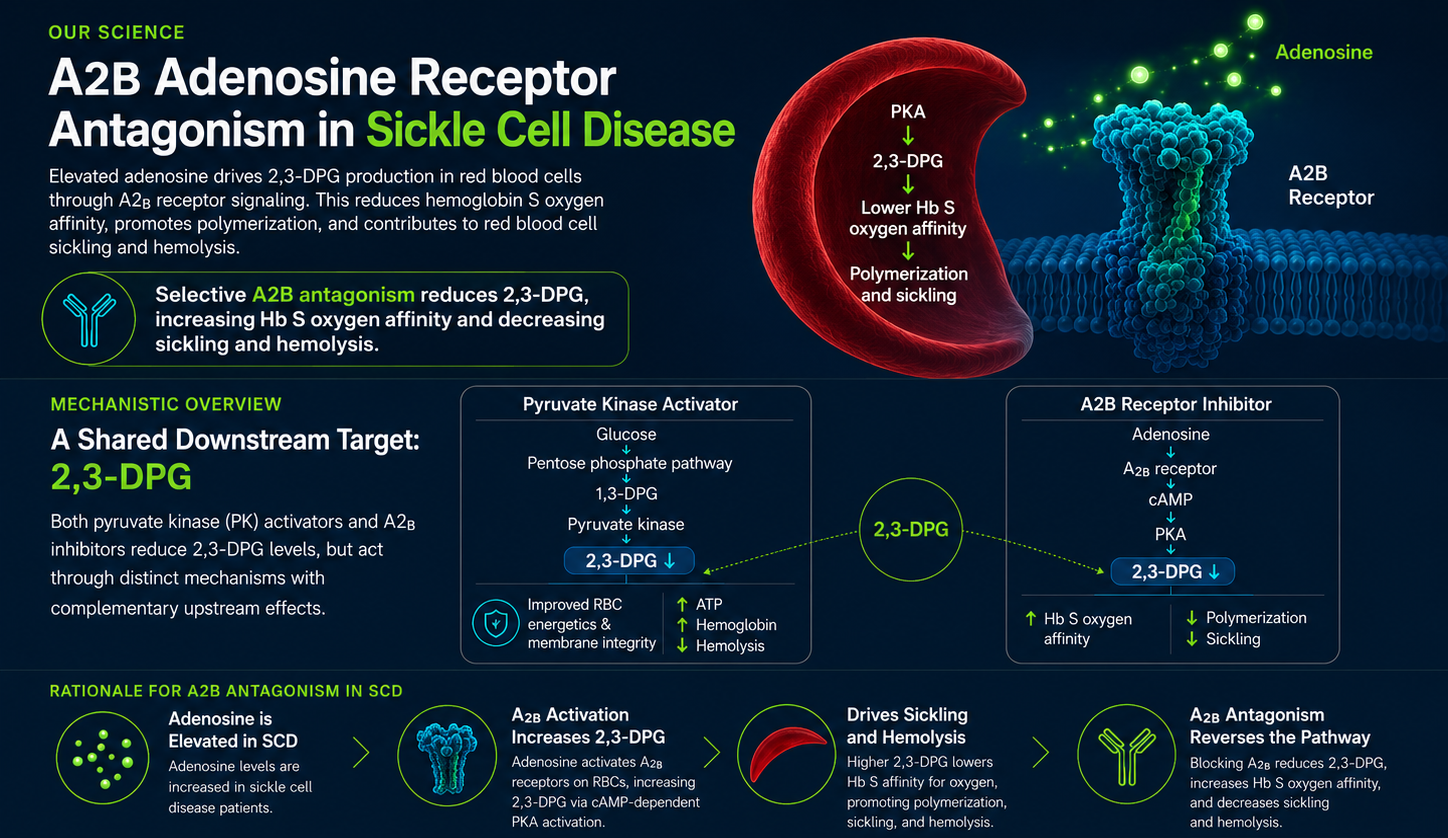
Rationale For A2B Antagonism In SCD
STEP 1
Adenosine Is Elevated in SCD
Adenosine levels are increased in sickle cell disease patients.
STEP 2
A2B Activation Increases 2,3-DPG
Adenosine activates A2B receptors on RBCs, increasing 2,3-DPG via cAMP-dependent PKA activation.
STEP 3
Drives Sickling and Hemolysis
Higher 2,3-DPG lowers Hb S affinity for oxygen, promoting polymerization, sickling, and hemolysis.
STEP 4
A2B Antagonism Reverses the Pathway
Blocking A2B reduces 2,3-DPG, increases Hb S oxygen affinity, and decreases sickling and hemolysis.
Explore Our Pipeline
See where TT-4 and the broader Cyncado portfolio sit in clinical development.